
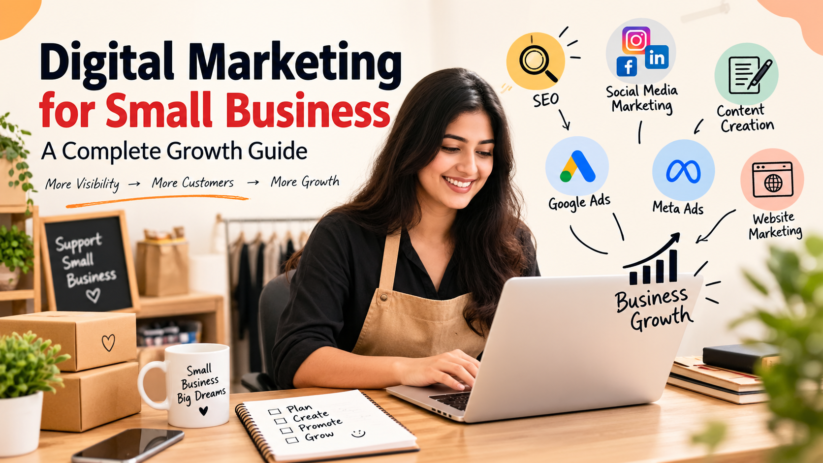
Running a small business today is no longer just about having a good product or providing excellent service. Customers are increasingly discovering businesses through Google, social media, websites, online reviews, videos and digital advertising.
This is where digital marketing for small business becomes important.
A strong digital marketing strategy can help a business become easier to discover, communicate its value clearly and build relationships with potential customers. But digital marketing isn’t simply about posting on Instagram or running advertisements. It involves bringing different online channels together with a clear business objective.
What Is Digital Marketing?
Digital marketing is the process of promoting a business, product or service through digital channels.
These can include:
- Search engines
- Websites
- Social media
- Blogs
- Google Ads
- Meta Ads
- Email marketing
- Online content
- Video
- Local search
- Online communities
The goal isn’t necessarily to be present on every platform.
The goal is to identify where your potential customers spend time and create a strategy that helps them discover, understand and trust your business.
Why Does a Small Business Need Digital Marketing?
Large companies often have dedicated marketing departments, but small businesses usually have limited time and resources.
Digital marketing gives smaller businesses the opportunity to build visibility without relying entirely on traditional advertising.
For example, a local service business can use SEO and Google Business Profile optimization to improve its online visibility. A product brand can combine social media content, visual creatives and Meta Ads to reach potential customers. A consultant can use SEO content and LinkedIn to demonstrate expertise.
The strategy depends on the business.
1. Build a Professional Website
Your website is often the central point of your digital presence.
It should clearly explain:
- What you offer
- Who you help
- Why customers should choose you
- What makes your business different
- How people can contact you
A beautiful website alone isn’t enough. Visitors should be able to understand your offering quickly and navigate the site easily.
Your website should also support your SEO, content and advertising efforts.
2. Use SEO to Become Discoverable
Search engine optimization helps businesses improve their visibility in organic search.
SEO can involve:
- Keyword research
- On-page optimization
- Technical SEO
- Content creation
- Internal linking
- Local SEO
- Website improvements
The objective isn’t simply to insert keywords into a page. The page needs to genuinely answer what the searcher is looking for.
Google’s SEO guidance emphasizes making content useful and accessible to people while helping search engines understand the page.
3. Build a Social Media Presence
Social media can help businesses show the personality behind their brand.
Instead of posting only promotional messages, businesses can create a mix of:
- Educational content
- Product demonstrations
- Customer stories
- Behind-the-scenes content
- Tips
- Short videos
- Visual posts
- FAQs
- Offers
The goal should be to create a recognizable brand rather than simply chase followers.
4. Create Useful Content
Content gives your business opportunities to answer questions that potential customers are already asking.
For example, a skincare brand could publish:
“How to Choose a Skincare Routine for Your Skin Type”
A digital marketing freelancer could publish:
“How SEO Can Help a Small Business Get More Website Visitors”
A jewellery business could publish:
“How to Choose Everyday Jewellery for Different Outfits”
Useful content can introduce your business before the customer is ready to make a purchase.
5. Use Paid Advertising Strategically
Organic marketing can take time.
Paid advertising can help businesses reach specific audiences more quickly.
Depending on your objective, this could include:
- Google Search Ads
- Meta Ads
- Instagram advertising
- Remarketing
- Lead-generation campaigns
- Product advertising
However, advertising should not be treated as a substitute for a poor website or unclear offer.
If someone clicks an advertisement but doesn’t understand the landing page, the campaign can struggle.
6. Create Consistent Visual Content
People often form an impression of a brand through its visual presentation.
Your:
- Colours
- Typography
- Images
- Social media graphics
- Product photography
- Videos
- Website design
should feel reasonably consistent.
Strong visual content can make a growing brand look more professional and recognizable.
7. Measure What Is Working
Digital marketing becomes more useful when you measure the right things.
Depending on your objective, you might track:
- Website traffic
- Search impressions
- Leads
- Enquiries
- Conversions
- Social engagement
- Advertising results
- Cost per lead
- Sales
Don’t judge the entire strategy based on one metric.
A business might have fewer website visitors but significantly more qualified enquiries. In that situation, traffic alone doesn’t tell the complete story.
Final Thoughts
Digital marketing for small business isn’t about doing everything at once.
A better approach is to understand your audience, define your goals and build a connected strategy around the channels that make sense for your business.
SEO can help people discover you. Content can educate them. Social media can build familiarity. Visual content can strengthen your brand. Paid advertising can help you reach targeted audiences.
When these activities work together, your digital presence becomes more than a collection of individual marketing activities.
It becomes a system for building visibility, trust and business opportunities.
I help businesses with SEO, social media marketing, content creation, visual content and paid advertising. Explore my digital marketing services to find the right strategy for your business.